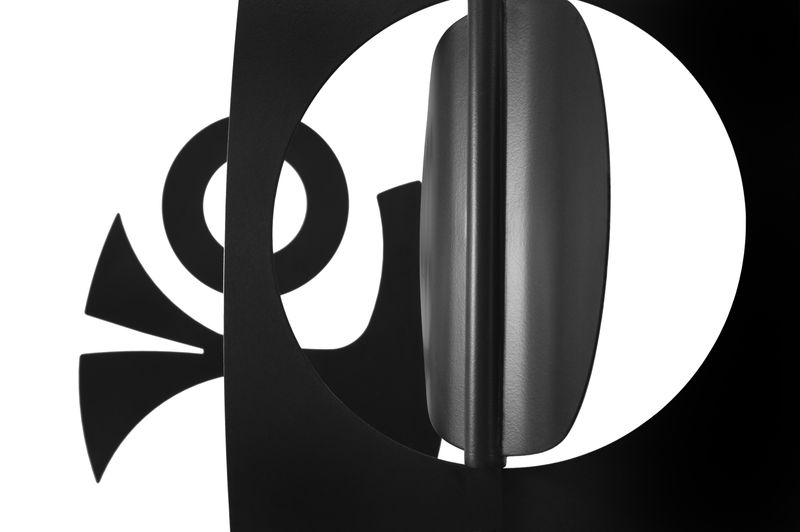
Décédé en 2013, Philippe Hiquily occupe une place emblématique dans l’histoire de la sculpture de la deuxième moitié du xxe siècle. Dans l’héritage de Julio González il opte pour le métal et le découpage direct, l’assemblage de la tôle par soudure autogène pour créer un langage qui en fait un des artistes les plus novateurs de sa génération. De son univers hiquilyen ancré dans une sublimation désirante de la femme est né un style identitaire d’une poésie subversive qui rejette les procédés canoniques et expérimente grâce à des machines inédites comme le Kraftformer, toutes les richesses plastiques et expressives recélées par le fer, la tôle d’acier récupérée, rouillée et patinée à l’acide phosphorique puis cirée, le laiton chromé, l’aluminium, jusqu’au bronze à partir des années 1980. Mythique, autant que visionnaire, sa sculpture demeure d’une troublante actualité. Alain Jouffroy y décèle « la réalité érotique ». Atemporelle, sa sculpture colle étroitement à notre temps. La rigueur est un moteur de son travail où la poésie s’allie à une ironie constante et un humour décapant. Sous l’action d’une inventivité corrosive et permanente il renouvelle les formes ambigües de ses déesses modernes immédiatement reconnaissables. Ses Vénus et ses Lolitas nous piègent dans leur jeu en apparence innocent. Leur métamorphose en objet de désir déclenche une ambivalence du mythe d’Eros sous-jacent à un érotisme agressif et tendre et désamorce l’hypocrisie d’une morale castratrice. D’une force séductrice et envoûtante, sa sculpture intervertit les rôles. « D’objet-mère » la femme devient « objet-femme ». Elle instrumentalise une iconologie où elle passe du statut de mater mythique à celui de mante religieuse, de la fonction matricielle à la séduction dévoreuse. C’est cette liberté d’expression et une volonté d’indépendance qui a tenu Hiquily à distance des groupes esthétiques, tant surréalistes qu’abstraits. Franc-tireur, amoureux de la vie et de la sculpture, forgeron cultivant l’hédonisme, baroudeur désabusé mais émerveillé par une puissance créatrice inassouvie, cet artisan aventurier de l’art a franchi les étapes initiatiques et laissé vagabonder son imaginaire indissociable du réel servi par un métier admirablement maîtrisé, entre contrôle et improvisation.
Philippe Hiquily, who passed away in 2013, holds an iconic place in the history of sculpture from the second half of the 20th century. Following in the footsteps of Julio González, he chose metal and direct cutting, assembling sheet metal through autogenous welding to create a language that made him one of the most innovative artists of his generation. From his unique "Hiquilyan" universe, rooted in a desiring sublimation of the female form, emerged a distinctive style marked by subversive poetry, rejecting canonical methods and experimenting with novel machines like the Kraftformer. He explored the vast plastic and expressive possibilities of iron, recovered steel sheets rusted and treated with phosphoric acid then waxed, chromed brass, aluminum, and, starting in the 1980s, bronze. Mythical and visionary, his sculpture remains strikingly relevant. Alain Jouffroy perceived in it "erotic reality." Timeless, his work is closely aligned with our era. Rigor drives his creations, where poetry merges with constant irony and sharp humor. Through a corrosive and perpetual inventiveness, he redefines the ambiguous forms of his modern goddesses, instantly recognizable. His Venuses and Lolitas trap us in their seemingly innocent games. Their transformation into objects of desire evokes an ambivalence of the Eros myth, blending aggressive and tender eroticism, while dismantling the hypocrisy of a repressive moral order. Seductive and captivating, Hiquily's sculptures invert traditional roles. From "mother-object," woman becomes "woman-object," using iconography to transition from mythical mother to praying mantis, from nurturing to devouring seduction. This freedom of expression and a strong will for independence kept Hiquily distant from aesthetic groups, both surrealist and abstract. A free spirit, lover of life and sculpture, a blacksmith who embraced hedonism, a seasoned adventurer yet ever fascinated by his unrelenting creative power, Hiquily traversed initiatory stages, allowing his imagination—inseparable from reality—to roam freely, supported by a masterfully honed craft, balancing control and improvisation.
Philippe Hiquily, who passed away in 2013, holds an iconic place in the history of sculpture from the second half of the 20th century. Following in the footsteps of Julio González, he chose metal and direct cutting, assembling sheet metal through autogenous welding to create a language that made him one of the most innovative artists of his generation. From his unique "Hiquilyan" universe, rooted in a desiring sublimation of the female form, emerged a distinctive style marked by subversive poetry, rejecting canonical methods and experimenting with novel machines like the Kraftformer. He explored the vast plastic and expressive possibilities of iron, recovered steel sheets rusted and treated with phosphoric acid then waxed, chromed brass, aluminum, and, starting in the 1980s, bronze. Mythical and visionary, his sculpture remains strikingly relevant. Alain Jouffroy perceived in it "erotic reality." Timeless, his work is closely aligned with our era. Rigor drives his creations, where poetry merges with constant irony and sharp humor. Through a corrosive and perpetual inventiveness, he redefines the ambiguous forms of his modern goddesses, instantly recognizable. His Venuses and Lolitas trap us in their seemingly innocent games. Their transformation into objects of desire evokes an ambivalence of the Eros myth, blending aggressive and tender eroticism, while dismantling the hypocrisy of a repressive moral order. Seductive and captivating, Hiquily's sculptures invert traditional roles. From "mother-object," woman becomes "woman-object," using iconography to transition from mythical mother to praying mantis, from nurturing to devouring seduction. This freedom of expression and a strong will for independence kept Hiquily distant from aesthetic groups, both surrealist and abstract. A free spirit, lover of life and sculpture, a blacksmith who embraced hedonism, a seasoned adventurer yet ever fascinated by his unrelenting creative power, Hiquily traversed initiatory stages, allowing his imagination—inseparable from reality—to roam freely, supported by a masterfully honed craft, balancing control and improvisation.